
RollerCoaster Tycoon® Classic
Atari, Inc.Simulation
3.91.42K Reviews
- Version
- 1.2.655
- Installs
- 100.00K
- Age Rating
- Everyone
Screenshots
Our Review of RollerCoaster Tycoon® Classic
 Analysis by Appyee
I came to RollerCoaster Tycoon® Classic expecting a familiar park-building game, but what keeps me interested is the steady shift between creative freedom and practical decisions. One moment I’m sketching out a coaster; the next, I’m thinking about whether the park can actually afford the plan. That mix gives this simulation game a more hands-on feel than a casual decorating app, and it suits short visits as well as longer sessions when I want to focus on a scenario.
Who will enjoy this kind of park management?
I’d recommend it most to players who like making a plan, testing it, and adjusting when the results don’t work out. If you enjoy the puzzle of fitting attractions into a park while keeping guests and finances in mind, there’s a lot to engage with here. It also works for returning fans who want the classic style on a phone, though the compact screen makes careful taps and patient navigation more important than they are with a mouse.
It’s a less natural fit if you mainly want a quick, guided game that explains every decision or a relaxed builder with no management pressure. The appeal is not just placing a ride and admiring it; you have to pay attention to how the whole park functions. I’d also think twice if you dislike older-looking visuals or prefer touch controls designed around large, simple actions. The retro presentation is part of the charm, but it does not make every detailed task effortless on mobile.
A sensible way to approach a new scenario
When I start a scenario, I try not to spend every available resource on the biggest attraction straight away. A more useful first pass is to inspect the goal, look at the space I have, and make a modest layout that can begin serving visitors before I commit to a grand design. That gives me room to notice what the park needs and correct early choices instead of having to rebuild everything around one expensive idea.
I also find it helpful to treat the park as a set of connected decisions. A ride can be exciting on its own, but its value depends on the route guests take to reach it, the other attractions nearby, and whether the park can keep up with the added activity. When something feels off, I look for the specific pressure point rather than changing several things at once. That makes it easier to tell whether my layout, prices, or attraction mix needs attention.
How it differs from newer mobile builders
Compared with many mobile simulation games built around frequent prompts and bite-sized upgrades, this one asks more of me as a planner. Its scenarios give my decisions a clear purpose, while designing rides and balancing park operations provide different kinds of satisfaction. That makes it feel closer to a traditional management game than to a simple theme-park decoration tool.
The trade-off is that players who want a modern, highly streamlined touch interface may prefer a newer builder. This game’s detail is part of its appeal, but it also means that a small screen can make precise construction and management feel fiddly. I wouldn’t choose it for a session where I want to make progress without thinking; I would choose it when I’m in the mood to shape a park and accept that a plan may need revision.
Getting Started with Your Park
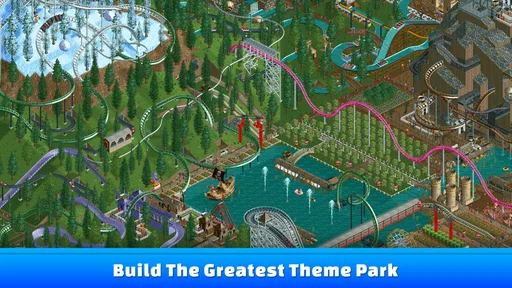
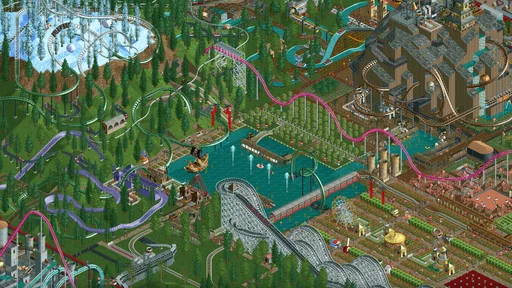
When you first open RollerCoaster Tycoon® Classic, you’re greeted with a familiar interface that feels like a warm hug from the past. The graphics are charmingly retro, reminiscent of the original PC versions from the late '90s and early 2000s, yet they’ve been spruced up to look crisp on any smartphone screen. Starting a new park is as exciting as opening a present—you never really know what challenges await you!
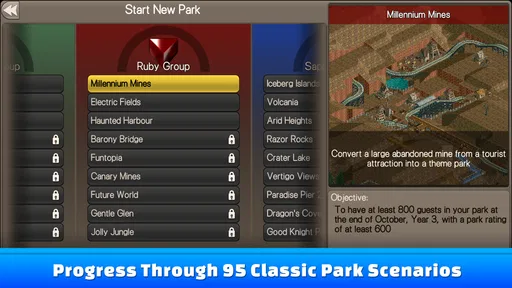
As you start building, the game offers a variety of scenarios, each with its own unique challenges and objectives. Whether you're tasked with reaching a certain number of guests or achieving a park value, there’s always something to keep you on your toes. And let me tell you, nothing beats the satisfaction of finally nailing that tricky scenario after a few tries.
Designing the Perfect Ride
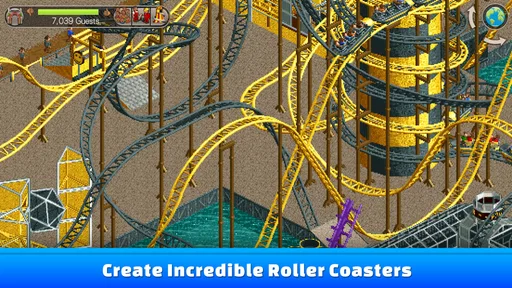
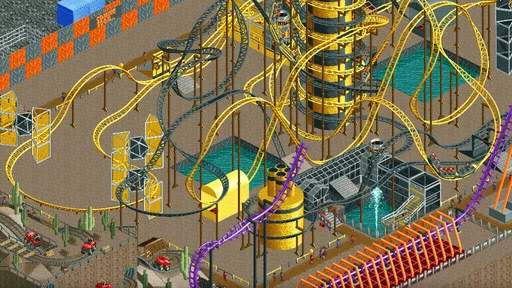
This is where the magic happens! Building rides in this app is intuitive and incredibly satisfying. You can create everything from gentle carousels to death-defying roller coasters. The coaster design tool is a highlight—it’s detailed enough to let your creativity run wild, but simple enough that you won't get bogged down in the details. Just remember: the crazier the ride, the more your guests will adore it, but don’t forget to keep safety in mind!
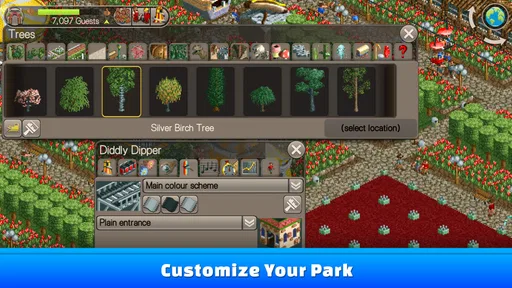
One thing I love is the ability to customize the ride colors and themes. You truly get to put your personal stamp on everything you build. It’s the perfect blend of creativity and strategy.
Managing Your Thriving Park
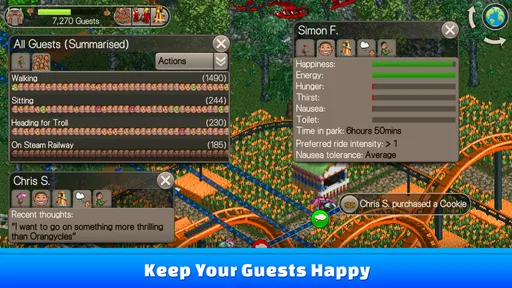
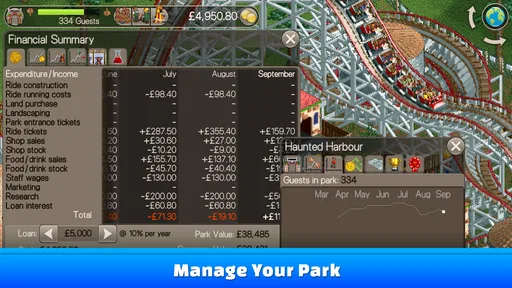
What’s a theme park without happy guests? Making sure your visitors are content and spending money is crucial. You’ll find yourself checking on guest happiness, park cleanliness, and the financials more often than you might expect. It’s all about balancing the thrill of new attractions with the nitty-gritty of park management.
The in-game economy system is realistic enough to keep things interesting. You’ll need to set the right prices for rides, food, and souvenirs to maximize profits. Just don’t be surprised if you find yourself becoming a bit of a penny-pincher—those park upkeep costs add up fast!
The Little Details
One of the things that struck me is how detailed the simulation is. From the ambient sounds of the park to the little animations of guests enjoying themselves (or sometimes getting lost!), everything adds to the immersive experience. The app runs smoothly, with minimal loading times, which keeps the experience seamless and engaging.
The game also includes a day-night cycle, which adds an extra layer of realism. Watching your park light up at night is a visual treat. And let’s not forget the occasional weather changes that can impact your park’s operations. It’s these little touches that keep the game feeling fresh and engaging.
Community and Mod Support
For those of you who enjoy sharing your creations, RollerCoaster Tycoon® Classic supports community sharing and mods. While the game is rich with content, the ability to download additional scenarios or share your own adds a whole new dimension to the gameplay. It’s a fantastic way to get inspired by the creativity of other players around the world.
Purchase, value, and what to expect
The game costs $5.99, with optional in-app purchases ranging from $1.99 to $5.99 per item. I’d treat the initial price as the main buying decision and consider any extra spending separately, rather than assuming it is needed to enjoy the core park-building experience. Its Everyone age rating makes it broadly suitable by content classification, while the actual challenge comes from planning and managing the park.
Atari, Inc. developed this mobile version, which was released on March 7, 2019. It has an average rating of 3.9 from around 6,500 ratings, with roughly 1,400 written reviews and over 100,000 installs. The current version is 1.2.655 and it requires Android 7.0 or later. Those figures give a useful sense of its place in the mobile market, but they don’t tell me whether its control style will suit your phone or how much time you’ll enjoy spending on careful park management.
Spending, progress, and fairness
What I like about the basic appeal is that progress is framed around designing and operating a park, not simply collecting upgrades. The scenario structure gives me a reason to make choices, and the money inside a park creates a planning constraint that is part of the simulation itself. I don’t read that in-game budgeting as evidence that real-money purchases are necessary; the two are separate questions, and I would avoid spending extra until I knew I wanted whatever an optional item offers.
For players concerned about competitive fairness, this is primarily a personal park-building experience rather than a game I’d pick for ranked competition. I can focus on my own designs and scenario goals instead of comparing a score with other players. I can’t make a broader claim about the effect of optional purchases on every mode, so my practical advice is simple: buy the game for its management and construction, and treat add-ons as optional rather than as a shortcut to success.
A realistic session on a busy day
On an ordinary evening, I might open a scenario with enough time to review its objective, make one or two layout decisions, and check how the park is doing before putting my phone away. That’s a better fit than expecting every visit to deliver a finished park. A longer, quieter session is more rewarding when I want to experiment with coaster shapes or rethink an awkward section of paths; a short break works best when I have a clear, small task in mind.
One practical habit is to pause and inspect the park before adding another attraction. If visitors are unhappy or the finances are tightening, more construction may make the underlying problem harder to solve. I try to make one change, observe what happens, and then decide on the next move. This slower loop is less flashy than constant expansion, but it helps me understand my own park instead of reacting to every problem with a new ride.
Controls, patience, and the right expectations
Building a detailed park on a touchscreen has an unavoidable trade-off: the same close-up decisions that make the simulation satisfying can demand more precision than a broad-stroke mobile builder. I’d use a larger screen if I had that option, and I’d take my time when placing paths or shaping a ride rather than trying to rush through construction. The interface feels familiar to players who know the series, but newcomers may need a little patience to learn where to look and how to manage the different parts of a park.
That also affects who should skip it. If you want a hands-off idle game, a quick arcade challenge, or a builder that constantly points you toward the next action, this is unlikely to be my first recommendation. If you like experimenting and don’t mind learning through a few imperfect decisions, the detailed management gives those experiments weight. I find that more compelling than a game where every choice is cosmetic, though it won’t be everyone’s idea of a relaxing phone game.
What I would check before buying
The key question for me is whether you want the classic management style enough to accept its mobile compromises. The $5.99 purchase price and the optional $1.99-to-$5.99 items make the spending structure clear at a basic level, but I wouldn’t infer a particular add-on’s contents or value without checking its own description. If you’re unsure, decide first whether constructing rides, working through scenarios, and tending to guest needs sound enjoyable; those are the parts that define the experience.
I’d also think about how you prefer to play. Someone who enjoys building carefully and revisiting a design can get more from this than someone who expects smooth, automatic progress in a few minutes. The rating and install figures show that the game has found an audience, but popularity is not a substitute for liking its older presentation and hands-on management. For me, the best reason to choose it is a genuine interest in the park simulation, not a promise of effortless mobile convenience.
Final Thoughts
Overall, RollerCoaster Tycoon® Classic is a delightful blend of nostalgia and modern mobile gaming. It's perfect for both long-time fans of the series and newcomers who love strategic simulation games. Whether you're building the tallest coaster or managing the minutiae of park operations, there's always something fun to do. So, if you're ready to channel your inner theme park tycoon, this app is a must-download. Just be prepared to lose track of time—because once you start building, it's hard to stop!
Ready to dive in? Check out the download links provided and start your theme park adventure today!
Verdict
Strengths of RollerCoaster Tycoon® Classic
- Nostalgic gameplay with modern updates.
- Wide variety of roller coaster designs.
- Offline play available anytime.
- Intuitive touch controls for easy navigation.
- Expansive scenarios for endless fun.
Limitations of RollerCoaster Tycoon® Classic
- Graphics feel outdated for some users.
- No multiplayer or social features.
- In-app purchases can be pricey.
- Learning curve for new players.
- Occasional performance lags.
Similar Picks in This Category
View All
Truckers of Europe 3
Wanda Software4.3

Town Building Life Simulator
XGame Global4.2

Fidget Toys Trading・Pop It 3D
Freeplay Inc4.7

Sculpt People
CrazyLabs LTD4.4

Scary Teacher 3D
Z & K Games4.2

Hair Tattoo: Barber Shop Game
CASUAL AZUR GAMES4.3
Frequently Asked Questions
What is RollerCoaster Tycoon® Classic?
RollerCoaster Tycoon® Classic is a mobile game that combines the best features of the original RollerCoaster Tycoon and RollerCoaster Tycoon 2. It allows players to build and manage their own theme parks, creating thrilling roller coasters and managing park operations. The game offers a nostalgic experience with updated features for modern devices.
Is RollerCoaster Tycoon® Classic free to play?
The game is a premium app, meaning it requires a one-time purchase to download. However, there are no additional in-app purchases necessary to enjoy the full experience. This makes it a great choice for those who prefer a complete gameplay experience without ongoing costs or disruptions from ads.
What devices are compatible with RollerCoaster Tycoon® Classic?
RollerCoaster Tycoon® Classic is available on both Android and iOS devices. It requires a relatively modern smartphone or tablet to run smoothly, so checking the app store for specific device requirements before purchasing is advisable. Ensuring your device has the latest operating system updates can also improve performance.
Does RollerCoaster Tycoon® Classic include multiplayer features?
As of now, RollerCoaster Tycoon® Classic is primarily a single-player experience. It focuses on individual creativity and management skills, allowing players to design and operate their parks at their own pace. While it doesn't include multiplayer features, it offers extensive content for solo play.
Are there any expansions or additional content available for the game?
Yes, RollerCoaster Tycoon® Classic offers additional expansion packs that can be purchased separately. These expansions include new scenarios, rides, and features that enhance the gaming experience. Players who enjoy the base game may find these expansions add significant replay value and depth.
Play our best games!


